How to Play Official Rust as a Solo With 14,782 Hours of Experience
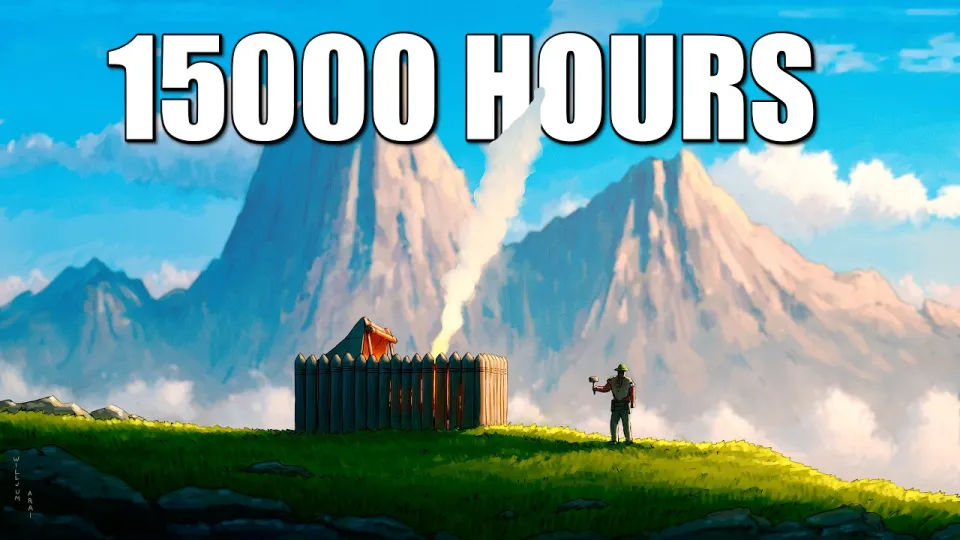
Video: How a solo with 14,782 Hours plays official rust...
Need articles like this for your video? They help promote it on YouTube and Google — order them in the Telegram bot @sat_sit_bot. Articles with your video embedded are written and posted by the bot itself — on popular topical sites (no ads). Free trial — 50 articles.
Playing Rust solo on official servers comes down to three habits: pick a base spot that nobody bothers to raid, convert every scrap into a tool or a raid rather than a weapon you will lose, and treat every fight as optional until you have something worth defending. Willjum's solo run after 14,782 hours shows those habits in action — a wipe that looks calm on camera but is built on thousands of hours of knowing when not to shoot. The video is sponsored by Manscaped, and the Beard Hedger Plus offer page carries the discount code shown in the read.
What 14,782 hours actually means in Rust
14,782 hours is roughly 1,180 hours per year if spread across 12.5 years of play, which is close to a part-time job sustained for more than a decade. Rust entered Steam early access in December 2013, so an account with this total has been logging in since the early days of the game, through several complete overhauls of the loot, building and combat systems. That history matters more than raw aim: it means the player has seen every base design, every monument route and every wipe-day rush dozens of times.
For a solo, the practical value of that experience is pattern recognition:
- Knowing which monuments get contested in the first two hours of a wipe and which stay quiet until day three.
- Knowing how much scrap a run actually produces, so a failed run is not a disaster.
- Knowing the sound of a raid starting two grids away and when to move loot instead of defending.
Base placement and the build that survives a solo wipe
The base in this run is a design by community builder Luca.Builds, credited in the video description, and it follows the solo rule that footprint matters less than visibility. A compact base tucked against terrain, with a small silhouette and no obvious loot room, attracts fewer raiders than a large compound with a shooting floor. Solo players on official servers rarely lose a wipe to a determined clan; they lose it to a bored trio that saw a big base and had explosives left over.
Key decisions for a solo build:
- Keep the core small and honeycomb outward rather than upward; vertical bases are easier to ladder and easier to see.
- Place the base away from the main road and away from the largest monuments, but within a reasonable run of a recycler.
- Build a second, disposable stash base before the main base is finished — losing one bag is survivable, losing all loot is not.
- Use decoy storage; a mannequin in a window and a lit base during a raid both pull attention away from the real rooms.
Scrap economy and the weapon trap
A solo's scrap is the whole wipe's budget, and the most common way to waste it is crafting weapons that get lost in the next fight. The video's running joke is a player who says he prefers not to spend scrap on weapons while quietly crafting another nail gun — and that is exactly the correct instinct for a solo. Guns are consumables; tools, a workbench and a tier-two blueprint set are investments that survive a death.
A workable solo spending order on official servers:
- Sleeping bags and a small stash near each monument you farm.
- A tier-one workbench and metal tools, so farming speed stops being the bottleneck.
- A tier-two workbench placed in a hidden room, not in the main loot room.
- Blueprints for a mid-tier weapon only after the base can survive a raid attempt.
- Explosives last — raiding is how a solo turns surplus into profit, not how a solo starts a wipe.
PvP discipline: when a solo should and should not fight
Most solo wipes end in a fight the player did not need to take. The 14,782-hour approach is selective aggression: avoid groups, avoid open fields, and only commit when the opponent is already damaged, carrying loot, or standing between you and your base. Watching a player with this much time, the fights look simple because the setup was done minutes earlier — positioning, a flank route, a bag nearby.
Practical rules that show up in high-hour solo play:
- Never chase a running player into terrain you have not scouted.
- Carry a cheap ranged option and a melee tool; a bow and a bone knife win more early fights than a lucky gun.
- After every kill, move the loot to a stash before looting the body fully.
- If a group has seen your base, assume it is on a list and move the valuables that night.
Common doubts from players watching high-hour solos
Viewers often ask whether hours like these can be replicated, and the honest answer is that the number is not the point — the routines are. A new player can copy the schedule: farm a monument route at low-pop hours, bank scrap in a stash, build small, and log off with loot split between two bases. The other recurring doubt is authenticity: long videos are edited from many hours of footage, so quiet stretches are cut and every wipe looks smoother than it was. Treat the content as a set of decisions to copy, not a minute-by-minute diary.
One more frequent question is about the candle hat and other early-game tricks. Small gadgets are situational: a light source helps in a dark monument, but it also makes you visible, so most experienced solos drop it as soon as they have a flashlight or night vision.
Willjum's servers and links from the video
The video description lists the creator's own servers and support pages, all worth checking if you want a lower-stakes environment than official Rust:
- https://manscaped.com/willjum — sponsor offer with the discount code from the read.
- https://www.patreon.com/Willjum — Patreon support page.
- https://www.twitch.tv/willjum — live streams.
- https://twitter.com/willjum1 — updates and clips.
- http://creativecommons.org/licenses/by/4.0/ — the music license referenced in the description.
Willjum also runs EU and NA community servers, including casual duo monthlies, solo-only Thursdays and modded trio and 3x options; connection addresses are in the description and on the Discord.
Final thoughts on the solo official experience
A solo wipe on official Rust is less about mechanical skill than about reducing the number of ways you can lose everything at once. Willjum's 14,782-hour run, broken down by the channel Willjum, shows the pattern clearly: small hidden bases, scrap spent on permanent upgrades, fights chosen rather than stumbled into, and loot split so a single death never ends the wipe. Copy the routines first and the hours will follow on their own. If you want the gear the creator promotes, the Manscaped offer page is where the code from the video applies.
Key takeaways
- Willjum's account shows 14,782 hours in Rust, roughly 1,180 hours per year if spread over 12.5 years of play.
- The run is a solo wipe on official Rust servers, not a modded or low-pop practice server.
- The base in the video is a build by creator Luca.Builds, credited in the video description.
- Willjum runs his own community servers (EU and NA) alongside the official-server content.
- The video was published on 7 June 2026 and includes a Manscaped sponsorship read.
Questions & answers
How long does it take to get good at Rust solo?
Most players need a few hundred hours just to learn monuments, crafting costs and building rules, and several hundred more before fights stop feeling random. The 14,782-hour figure in the video is an extreme case built over more than a decade, but the useful habits — small bases, stashed loot, selective fights — can be learned within a single wipe.
Is it realistic to survive on official Rust servers as a solo?
Yes, but survival depends on base placement and timing more than on combat. Official servers have large groups, so solos do best by building away from main roads, farming at low-pop hours and never holding all their loot in one room.
Why do high-hour Rust players avoid spending scrap on weapons?
Weapons are lost on death, while workbenches, blueprints and tools keep producing value. Experienced solos spend scrap on farming speed and infrastructure first, then craft guns only when they have a specific fight or raid in mind.
Are the bases in these Rust videos built by the creator?
Not always. The base in this video is credited to community builder Luca.Builds, and the video description links to his channel. Many Rust content creators showcase designs made by dedicated base builders rather than designing every structure themselves.
Source: How a solo with 14,782 Hours plays official rust... · Markdown version